

 Book Editing
 Author Website
 Audio Book
 Book Video
 Book Cover Design
 Illustration
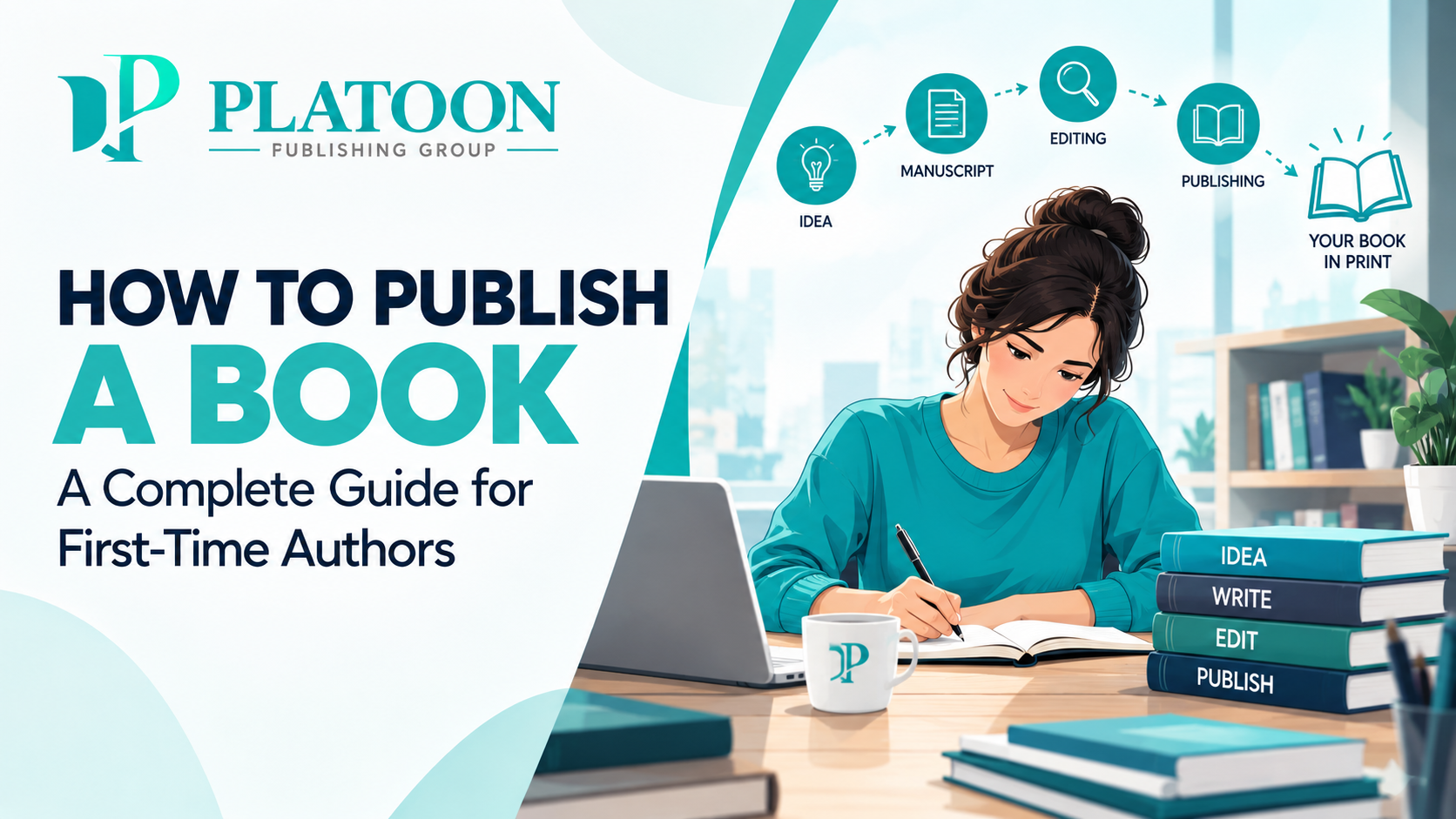
Publishing a book is an exciting achievement, but turning a finished manuscript into a professionally published book involves more than simply uploading a file to Amazon. Authors need to consider editing, formatting, cover design, ISBN registration, distribution, and marketing before their book is ready for readers.
For first-time authors, the publishing process can seem complicated. Understanding each stage can make the journey more organized and help you make informed decisions about your book. Whether you are considering traditional publishing or self-publishing, this guide explains the essential steps involved in publishing a book.
1. Start With a Finished Manuscript
The first step in book publishing is completing your manuscript. Before thinking about publishing platforms, cover designs, or marketing, your book should be as complete and polished as possible.
A finished manuscript should have a clear structure, consistent writing style, and an organized flow. Depending on the type of book, this may include chapters, sections, illustrations, references, or other supporting material.
It is also important to review your manuscript before sending it for professional editing. Reading your work multiple times can help identify obvious errors, inconsistencies, or sections that need further development.
2. Have Your Book Professionally Edited
Professional editing is one of the most important parts of the publishing process. Even experienced writers can overlook problems in their own work because they are already familiar with what they intended to say.
Different types of editing can address different needs. Developmental editing focuses on the overall structure, organization, pacing, and content of a manuscript. Copyediting addresses grammar, spelling, sentence structure, consistency, and readability. Proofreading is generally performed after the major editing and formatting stages to identify remaining typographical or formatting errors.
The type of editing your book requires will depend on its condition, genre, length, and intended audience.
3. Choose a Publishing Approach
Authors generally have several publishing options. The two commonly discussed approaches are traditional publishing and self-publishing.
Traditional publishing usually involves submitting a manuscript or proposal to publishing houses or literary agents. If a publisher accepts the work, the publishing company may handle areas such as editing, production, distribution, and marketing according to the agreement.
Self-publishing gives authors greater control over the publishing process. The author typically manages or hires professionals for services such as editing, book formatting, cover design, publishing, and marketing.
There is no single approach that works for every author. The right option depends on your goals, budget, timeline, desired level of creative control, and publishing expectations.
4. Create a Professional Book Cover
A book cover is often the first visual impression a potential reader has of your book. A professional cover should communicate the genre and tone of the book while remaining clear and appealing when displayed both physically and online.
Cover design involves more than selecting an attractive image. Typography, layout, color choices, imagery, dimensions, and overall composition all need to work together.
The cover also needs to meet the technical specifications of the publishing platform and format. Print books may require front cover, spine, and back cover artwork, while an ebook generally requires a front cover designed for digital display.
5. Format Your Book
After editing and cover design, the interior of the book needs to be professionally formatted.
Book formatting involves organizing the manuscript so that the text, headings, chapters, page numbers, images, tables, and other elements display correctly in the final format.
Print books require formatting based on the selected trim size and printing specifications. Ebooks require a different approach because readers can change font sizes and viewing settings on their devices.
Professional book formatting helps create a consistent reading experience and reduces the possibility of technical problems during publishing.
6. Obtain an ISBN and Protect Your Work
An ISBN, or International Standard Book Number, is a unique identifier used for books and certain book-related products. Requirements and availability can vary depending on the country and publishing arrangement.
Authors should also understand copyright. Copyright protection generally exists automatically when an original work is created, although registration and other legal considerations vary by country.
Before publishing, authors should make sure that they have the appropriate rights to use any third-party material included in the book, such as photographs, illustrations, quotations, or other copyrighted content.
7. Select Your Publishing and Distribution Platforms
Once your manuscript and book files are ready, you can determine where your book will be published and distributed.
Amazon Kindle Direct Publishing (KDP) is one of the major platforms used by independent authors for ebooks and print books. Depending on the publishing strategy, authors may also consider other ebook retailers, print-on-demand services, bookstores, libraries, or distribution networks.
The available formats and distribution options will depend on your publishing goals. Some authors focus primarily on ebooks, while others publish paperback, hardcover, audiobook, or multiple editions of the same title.
Before choosing distribution options, review the platform's requirements, royalties, pricing rules, territories, and file specifications.
8. Write an Effective Book Description
Your book description is an important part of presenting your book to potential readers. It should explain what the book is about and encourage the right audience to learn more.
A strong description usually begins with an engaging introduction, followed by information about the book's premise, themes, characters, benefits, or key topics depending on the genre.
Avoid simply copying a section of the manuscript. Instead, create a description specifically designed to communicate the value and purpose of the book to prospective readers.
Relevant search terms can also be incorporated naturally where appropriate, particularly when preparing an online book listing. However, excessive keyword use can make the description difficult to read.
9. Develop a Book Marketing Strategy
Publishing your book is only one part of reaching readers. Marketing can help increase awareness and bring attention to your title after publication.
A book marketing strategy may include author websites, social media, email marketing, online advertising, public relations, guest articles, interviews, book reviews, promotional campaigns, and other forms of outreach.
Authors can also optimize their online book listings using relevant keywords, appropriate categories, compelling descriptions, and professional imagery.
The most suitable marketing activities depend on the genre, audience, budget, and goals of the author. A strategy that works for a business book may not be appropriate for a children's book or a novel.
10. Review Everything Before Publication
Before making your book available to readers, carefully review the final files and listing information.
Check the title, subtitle, author name, cover, table of contents, chapter headings, page numbers, formatting, book description, categories, keywords, pricing, and other publishing details.
For print books, ordering a proof copy can provide an opportunity to review the physical book before wider distribution. This can help identify issues that may not be obvious when reviewing a digital file.
Taking time for a final quality check can prevent avoidable mistakes from appearing in the published edition.
Common Mistakes First-Time Authors Should Avoid
First-time authors sometimes rush toward publication without giving enough attention to preparation. Common mistakes include publishing an unedited manuscript, using a low-quality cover, overlooking formatting problems, choosing inappropriate categories, writing a weak book description, or expecting immediate sales without a marketing strategy.
Another common mistake is trying to handle every part of the publishing process without professional assistance. While authors can manage many publishing tasks independently, specialized professionals can provide expertise in areas such as editing, design, formatting, distribution, and marketing.
Final Thoughts
Publishing a book involves several stages, from completing and editing the manuscript to designing the cover, formatting the interior, selecting publishing platforms, and promoting the finished book.
For first-time authors, understanding the process in advance can make publishing more manageable and help avoid common mistakes. Whether you choose traditional publishing, self-publishing, or professional book publishing services, the goal should be to produce a book that is professionally prepared and accessible to its intended audience.